


Automated Warehouse and Goods-to-Person Solution
Connect Excellent WMS (EXC-WMS) with AGV/AMR and automated storage equipment to manage inbound, putaway, picking, replenishment, outbound, and inventory information. Excellent MES (EXC-MES) provides production requirements and related shop-floor information to support manufacturing and warehouse operations.
Common Challenges in Warehouse and Picking Operations
When storage locations, picking tasks, and system data are not synchronized, warehouse operations often face the following challenges:

Limited Storage Capacity
Existing warehouse space cannot support growing material and finished goods volumes, while expansion is often limited.

Inefficient Picking
Retrieving goods from high racks requires repeated searching and handling, making picking slow and labor-intensive.

Disconnected Systems
WMS, MES, and transport equipment operate separately, making task and inventory synchronization difficult.

Stricter Safety Requirements
Human–machine operations require effective traffic control, equipment detection, and safety protection.
Connect Systems and Equipment to Build a Continuous Warehouse Workflow
An automated warehouse is not only about increasing rack height or adding transport equipment. It also requires real-time coordination between warehouse tasks, equipment execution, and inventory information. NTT DATA uses EXC-WMS as the core system to connect automated storage and handling equipment, while EXC-MES provides production demand and related manufacturing information. EXC-WMS manages inbound, putaway, picking, replenishment, outbound, and inventory updates in one continuous workflow.
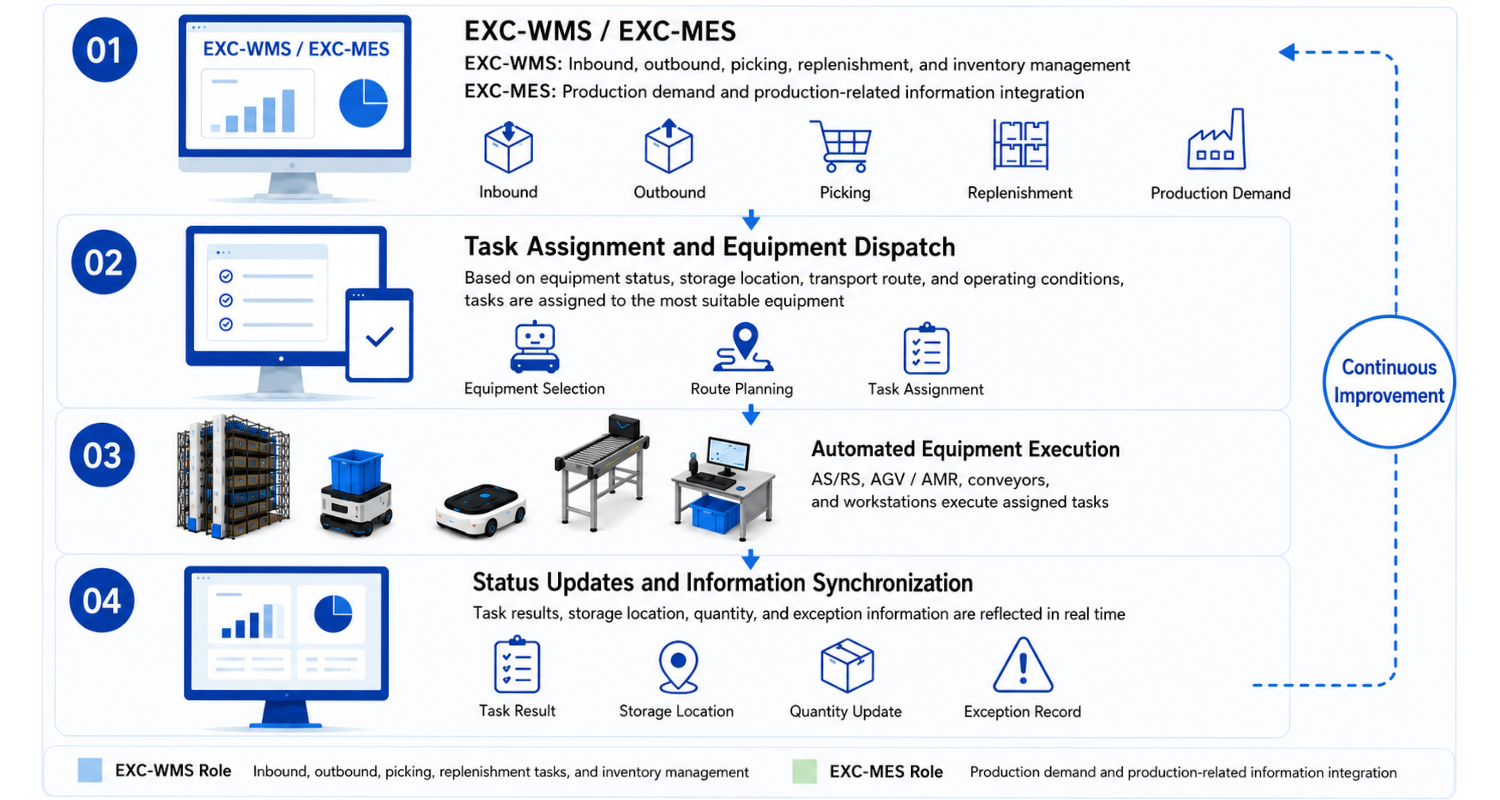
01|Task Creation
EXC-WMS generates warehouse tasks for inbound, outbound, picking, and replenishment. For production replenishment, EXC-MES can provide production demand and related manufacturing information.
02|Task Dispatching
The system sends warehouse tasks to the corresponding automated equipment for execution based on operational requirements.
03|On-site Execution
Automated storage equipment, AGV/AMR, conveyors, and workstations work together to complete transport and picking operations.
04|Status Feedback
Task results, inventory updates, and exceptions are reflected in EXC-WMS in real time. Relevant operational information can also be synchronized with EXC-MES.
Configure Suitable Equipment by Material Type and Workflow
Different warehouse scenarios have different requirements for item size, storage height, load capacity, and picking methods. Based on on-site conditions, NTT DATA combines automated storage, in-warehouse transport, and picking equipment. EXC-WMS integrates warehouse tasks, equipment status, and inventory information, while EXC-MES provides production demand and related manufacturing information for production logistics.
 Improve Storage Utilization and High-bay Access
Use vertical warehouse space to increase available storage locations. Automated storage equipment can support different heights, depths, and container types, making it suitable for sites with many SKUs, limited storage space, or a need to improve space utilization.
Applicable Equipment: ND71, ND42T-X, ND42D, ND42-E6, ND42-E4
 In-warehouse Transport and Line-side Replenishment
Connect storage areas, workstations, and production lines to transport totes, trays, and heavy materials. This helps reduce manual handling and the burden of cross-area movement.
 Picking Workstations and Line-side Management
Combine picking workstations, put walls, and electronic material cabinets to support goods-to-person picking, order sorting, line-side replenishment, and material information traceability.
Applicable Equipment: Picking Workstation / Put Wall, Line-side Electronic Cabinet
Automated Equipment Features and Applications
Select suitable automated equipment based on rack height, tote size, storage depth, load weight, and on-site routes. By connecting with EXC-WMS, warehouse tasks, equipment status, and inventory information can be synchronized. For production logistics, EXC-MES provides production demand and related manufacturing information.
High-density Tote Storage and High-bay Access
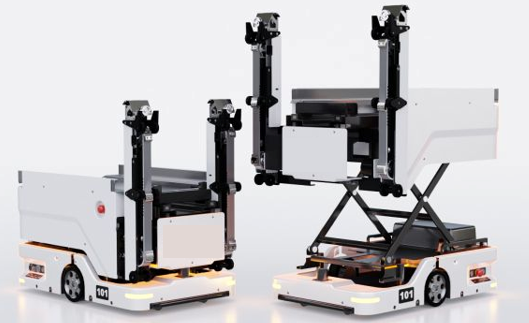
Tote Handling Robot ND71
With autonomous travel, vertical lifting, and curved-track movement capabilities, ND71 supports tote storage and retrieval in high-density rack areas. Its single-sided track design helps shorten on-site deployment time, while the number of robots can be expanded step by step based on operational needs.
Fast Deployment: Single-sided track design helps reduce rack modification and site adjustment.
Improved Storage Utilization: Supports racks up to 12 meters high, making better use of vertical warehouse space.
Flexible Expansion: The number of robots can be increased as storage scale and processing demand grow.
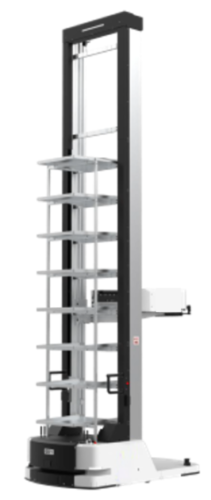
Telescopic Lifting Tote Robot ND42T-X
Designed for high-bay racks and low-clearance aisles, ND42T-X supports tote storage, retrieval, and multi-tote handling. During travel, the robot can lower its mast to pass under low door frames or beams. It can also connect with EXC-WMS to receive tasks and reflect operation status in the system.
High-bay Access: Supports a maximum picking height of approximately 10 meters, improving the use of vertical warehouse space.
Flexible Travel: The mast can be lowered during travel, allowing the robot to pass through areas with lower clearance.
Multi-tote Handling: Multi-layer carrier design allows up to 8+1 totes to be transported in a single trip.
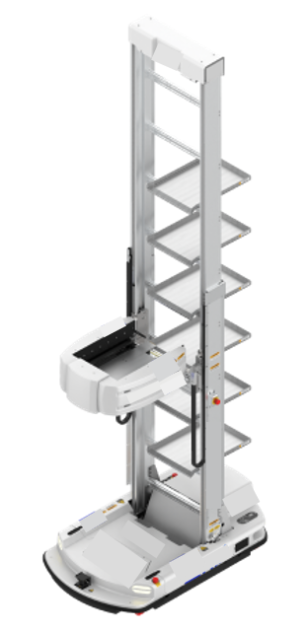
Multi-layer Tote Robot ND42D
ND42D supports storage and retrieval at double-depth rack locations and can move freely in warehouse aisles without auxiliary rails. Its multi-layer carrier can transport multiple totes at the same time, making it suitable for warehouses with many SKUs, high picking frequency, or a need to improve single-trip handling efficiency.
Double-depth Storage: Supports deeper rack locations to improve warehouse space utilization.
Multi-tote Handling: Supports a maximum load of 300 kg and can transport up to 8 totes at the same time.
Container Compatibility: Supports both plastic totes and cardboard boxes, making it suitable for mixed-container picking scenarios.

Hook-type Tote Robot ND42-E6
ND42-E6 uses a hook-based handling mechanism for tote storage and retrieval. It supports 1- to 5-deep storage locations and a maximum transport load of 300 kg per trip. By increasing available storage locations per unit area, it is suitable for e-commerce, third-party logistics, footwear and apparel, and 3C warehouse scenarios.
Multi-depth Storage: Supports 1- to 5-deep storage locations to improve rack space utilization.
Carrier Compatibility: Supports pallets, tires, foam boxes, and other load carriers.
Flexible Integration: Can connect with racks, conveyor equipment, and EXC-WMS to support integrated warehouse workflows.
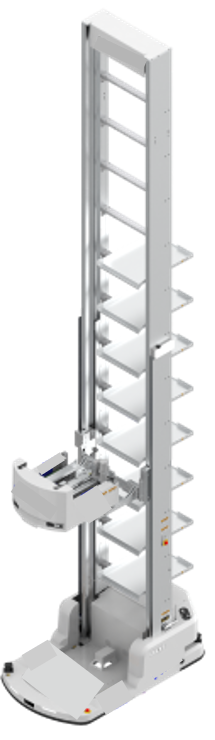
Clamp-type Tote Robot ND42-E4
ND42-E4 uses a clamp-type fork mechanism to retrieve totes and cardboard boxes of different sizes. Its multi-layer carrier can transport multiple containers in a single trip, without the need for auxiliary rails. It is suitable for warehouse scenarios with many SKUs, diverse container types, and high picking frequency.
Container Compatibility: Supports totes and cardboard boxes of different sizes, making it suitable for mixed-container operations.
Multi-container Handling: Multi-layer carrier design allows up to 8 totes to be transported in a single trip.
Flexible Deployment: Uses QR code and inertial navigation, without the need for additional auxiliary rails.
In-warehouse Transport and Line-side Replenishment
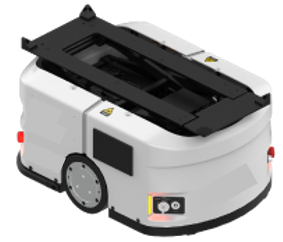
Tote Transport Robot ND50H
With a compact body, ND50H can autonomously transport totes between warehouse aisles and workstations. It supports autonomous navigation, active obstacle avoidance, and automatic charging. It can also work with high-bay tote handling robots to quickly transfer retrieved totes to picking areas or line-side replenishment workstations.
Multi-container Compatibility: Supports totes of different sizes and materials to meet diverse handling needs.
Stable Tote Handling: Can be equipped with a stepped platform to carry totes of different sizes at the same time.
Fast Transport: Supports a maximum travel speed of approximately 4 m/s and can operate along curved routes.

Low-profile Warehouse Mobile Robot ND3G
ND3G is suitable for raw materials, semi-finished goods, line-side replenishment, production line transport, and finished goods outbound operations. It can connect storage areas, workstations, and production lines to reduce manual handling workload and improve in-plant logistics efficiency.
Load Compatibility: Supports the handling of pallets, tires, foam boxes, and other load types.
Environmental Adaptability: Supports cleanroom and anti-static environments, making it suitable for electronics manufacturing sites.
System Integration: System Integration: Can work with racks and conveyors and connect with EXC-WMS to receive transport tasks and return operation status. For production-line transport, EXC-MES can provide production requirements and related shop-floor information.

Low-profile Jack-up AMR ND1000A
ND1000A supports a rated load of up to 1,000 kg. It can move underneath pallets or material racks and lift them for transport, making it suitable for large, heavy, or irregular carriers. It can connect with EXC-WMS to receive tasks and reflect operation status in the system. For production-line transport, production demand can be provided by EXC-MES. It can also connect with elevators or transfer stations based on on-site planning.
Heavy-load Transport: Supports a lifting height of approximately 70 mm and can handle pallets, material racks, and irregular carriers.
Flexible Movement: Maximum travel speed is approximately 1.5 m/s, with bidirectional driving and in-place rotation.
Accurate Positioning: Uses QR code and inertial navigation, with optional reflector-assisted SLAM. Stopping accuracy is ±10 mm / ±1°.
Picking Workstations and Line-side Management
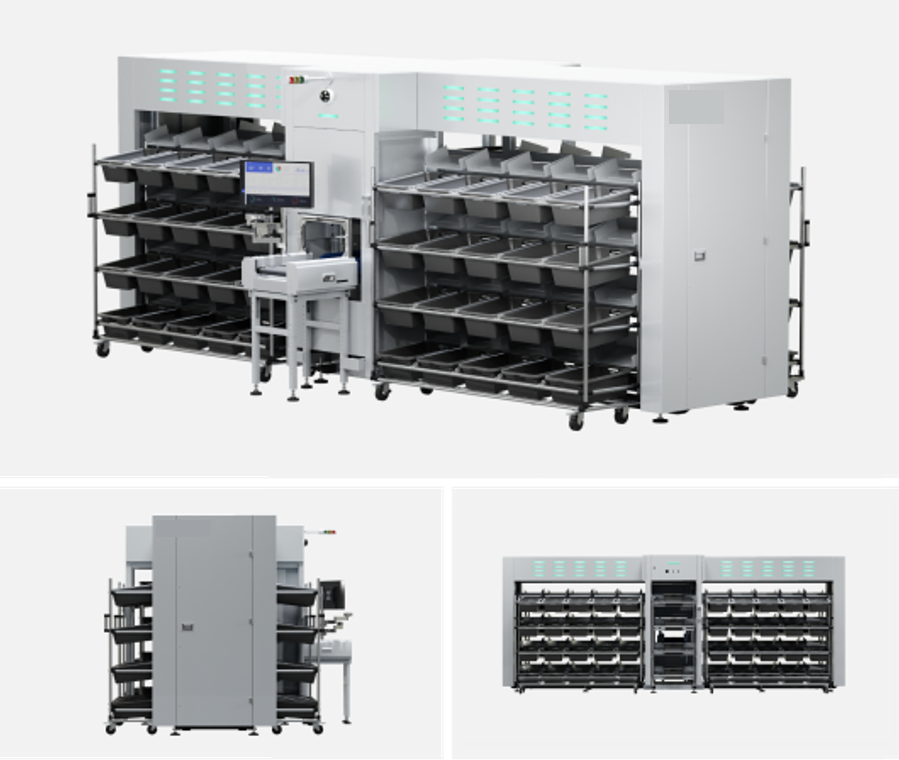
Picking Workstation / Put Wall
With barcode scanning, light indicators, and location guidance, the picking workstation / put wall guides operators through sorting and verification. It is suitable for warehouses with limited space, many SKUs, or fluctuating order volumes. It can connect with EXC-WMS to receive tasks and return picking results.
Fast Deployment: Modular design allows deployment to be completed in as fast as 3 days.
Efficient Sorting: Depending on the equipment configuration, each workstation can process up to approximately 800 items per hour, with accuracy up to 99.99%.
Flexible Expansion: The number of ports and equipment scale can be adjusted based on order volume and peak-season needs.
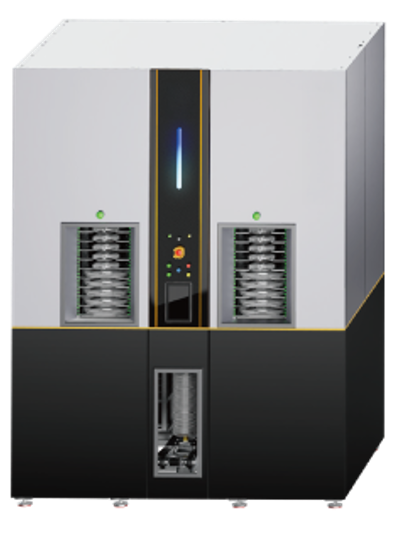
Line-side Electronic Material Cabinet
(SMT / Production Line Replenishment)
EXC-WMS manages inbound, outbound, inventory, and replenishment tasks, while EXC-MES provides production requirements and related shop-floor information. When combined with AGV/AMR, the cabinet supports automated line-side replenishment and return.
High-capacity Storage: Compact cabinet footprint with multiple configurable storage locations to improve line-side space utilization.
Dual-channel Operation: Supports batch inbound and outbound operations at the same time, reducing material waiting time.
AGV/AMR Integration: Equipped with a material tote positioning mechanism and can connect with AGV/AMR for automated replenishment and return.
Improve Warehouse Efficiency from Storage to Picking
By connecting EXC-WMS with automated storage, AGV/AMR, and picking equipment, storage locations, tasks, equipment status, and inventory information can stay synchronized. EXC-MES provides production demand and production-related information for production logistics. This improves space utilization, operational efficiency, and warehouse management visibility.
Storage, transport, and picking task status can be tracked in real time.
Improve Storage Utilization
Make full use of vertical warehouse space and increase available storage locations to address growing SKUs and limited storage capacity.
Shorten Transport and Picking Time
Connect EXC-WMS with automated handling and picking equipment to reduce manual travel, material searching, and waiting time.
Capture Real-time Inventory Status
After storage, transport, or picking operations are completed, storage locations, quantities, and operation results are reflected in EXC-WMS in real time to improve inventory accuracy.
Reduce Manual Work and Operational Risk
Reduce the need for high-bay picking and heavy material handling, lowering operator workload while keeping complete task and exception records.
Enhance Human–Machine Safety with Detection and Protection
Through environmental detection, segmented speed control, emergency stops, and equipment status monitoring, the solution helps reduce human–machine collaboration risks. Equipment exceptions can be reported in real time to support faster on-site response.
Active Detection 
Multi-directional detection supports segmented speed reduction and stop control. Low-position obstacle detection can also be added to cover blind spots.
Operator Alerts 
Indicator lights, beacons, and voice prompts alert operators to equipment movement and abnormal conditions.
Device Protection 
Lift protection, travel protection, position monitoring, and battery status monitoring support exception handling and fault response.
Operation Rules 
Safety rules can be defined for charging, maintenance, and controlled areas, together with on-site signage and guidance.
Applicable Warehouse and Production Logistics Scenarios
Based on material type, order model, replenishment frequency, and traceability needs, NTT DATA combines automated storage, AGV/AMR, and picking equipment with EXC-WMS to support storage, transport, picking, and inventory management across industries. For production logistics, EXC-MES provides production requirements and related shop-floor information.
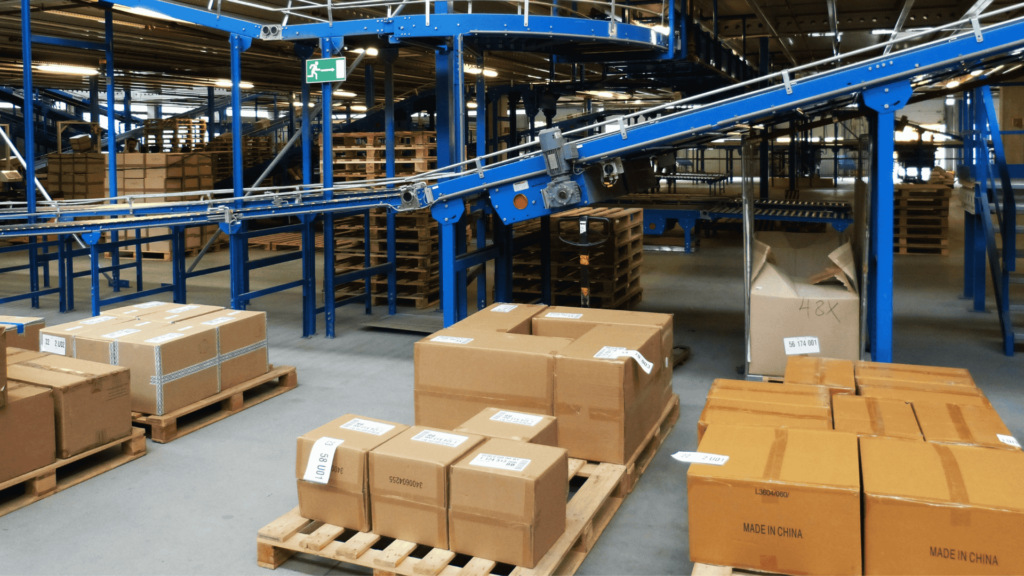
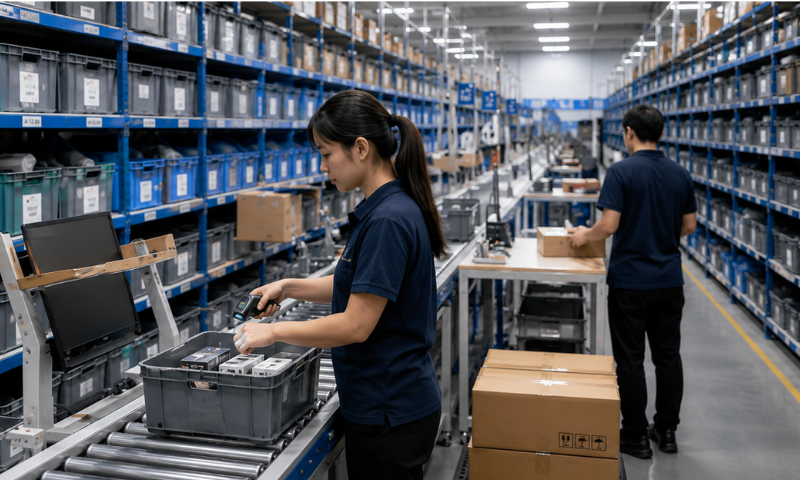
E-commerce and Third-party Logistics
Supports goods-to-person picking, put wall sorting, and flexible expansion to meet high SKU variety, fluctuating order volumes, and seasonal demand.
3C and Apparel Logistics
Supports high-mix, small-batch operations with automated storage and flexible transport to shorten picking time.
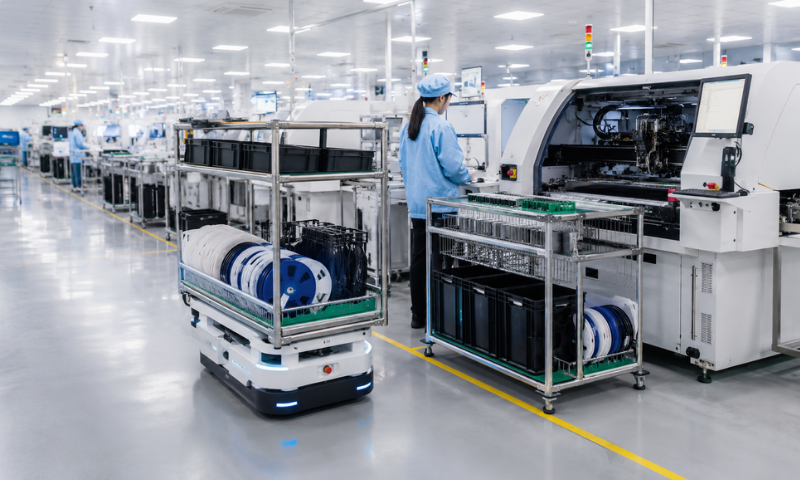
SMT and Assembly Lines
Supports line-side material tray management, rapid replenishment, empty-container return, and cross-area transport to help align material supply with production needs.
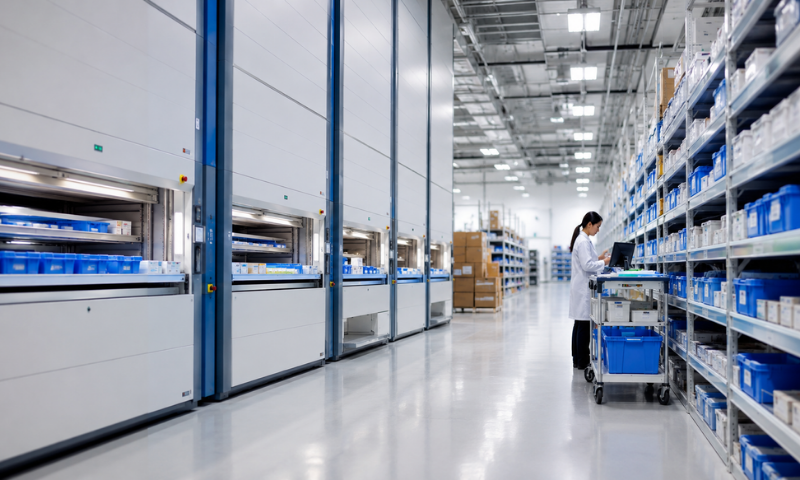
Medical and Pharmaceutical Warehousing
Supports the management of batch numbers, expiration dates, storage locations, and picking records.
Further Reading: Need more details on transport system integration or equipment selection? You may also refer to our AGV/AMR Automation Integration Solution and AGV/AMR Automation Equipment Overview.
FAQ 
Q1: Can an existing warehouse be upgraded with automation?
In most cases, automation can be introduced into an existing warehouse. However, the available rack height, aisle width, hardware specifications, and on-site transport routes should be assessed first. The solution can then be deployed in phases based on operational needs.
Q2: What safety measures should be considered for warehouse automation?
Personnel safety is the top priority. The solution includes detection, speed reduction, emergency stops, and operating rules for people and equipment working in the same area. Operator training and safety education are also provided during implementation.
Q3: How should battery life and charging be planned?
Charging can be planned based on equipment model, shift schedule, and workload. Autonomous charging, battery swapping, or standby mechanisms can be configured to reduce the impact on daily operations.
Planning an automated warehouse or goods-to-person picking solution? Start by reviewing your available space, material types, target workflows, and system integration requirements.→ Discuss Implementation Requirements