


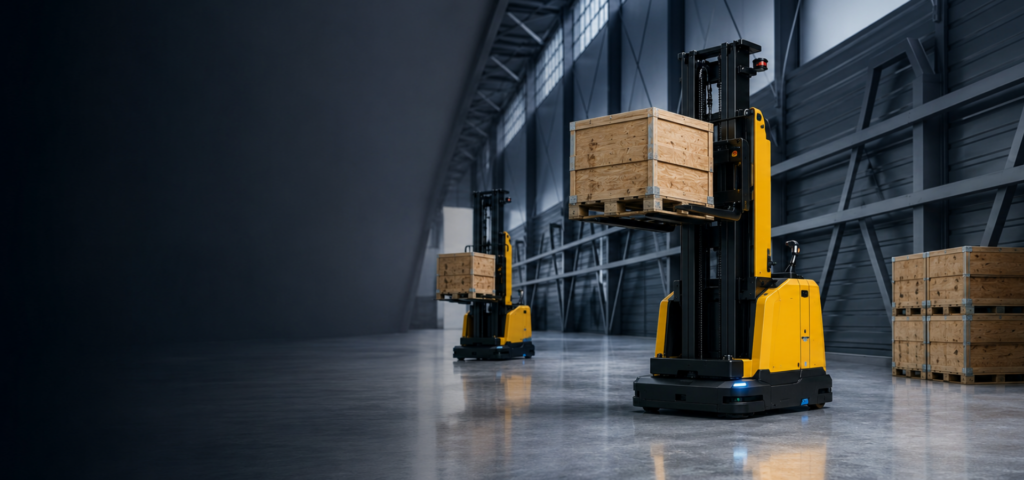
AGV/AMR Integration Service
AGV/AMR Automation Integration Solutions
Integrate AGVs/AMRs with MES, WMS, and shop-floor equipment for real-time dispatching, tracking, and material flow visibility
CHALLENGE
Material Handling Challenges on the Shop Floor
Manual material movement, forklift-based transport, and disconnected task coordination can make material flow difficult to manage across production and warehouse areas. Before introducing AGVs/AMRs, manufacturers need to clarify where workload, delays, visibility gaps, and system disconnections occur.
01 Manual Workload
Manual transport still depends on operators and forklifts, increasing workload and operational dependency.
02 Material Flow Delays
Materials may arrive late or in the wrong place, causing waiting, rechecks, and temporary storage.
03 Limited Flow Visibility
Task status, material locations, and transport progress are not always visible in real time, making delays hard to track.
04 Disconnected Systems
MES, WMS, AGV control systems, and shop-floor equipment may operate separately, making dispatching and feedback hard to synchronize.
SOLUTION
Plan AGV/AMR Integration from Process to System Connection
AGV/AMR implementation is not only about selecting vehicles. NTT DATA helps manufacturers clarify material flow, dispatching logic, status feedback, and equipment connection requirements to build practical and scalable integration flows.
Considering which AGV/AMR model best fits your needs? Explore our AGV/AMR automation equipment →
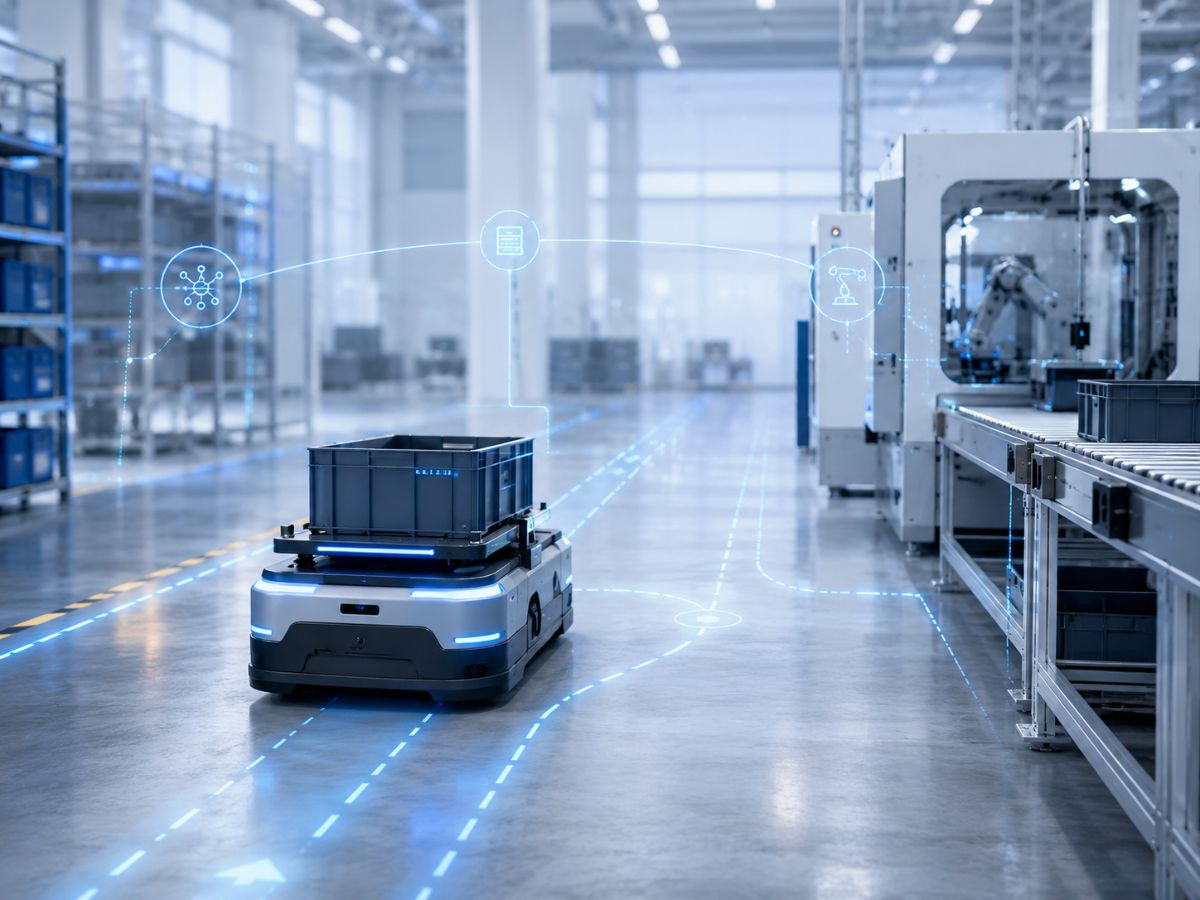

Understand the Material Flow
Review routes, task frequency, material types, and constraints to identify suitable AGV/AMR scenarios.

Connect Tasks with Systems
Define task request, dispatch status, and result flows across MES, WMS, and AGV control systems.

Integrate with Equipment
Plan communication with conveyors, elevators, robots, and loading/unloading mechanisms.
INTEGRATION ARCHITECTURE
Synchronized Material Handling Architecture
NTT DATA designs data flows across MES, WMS, AGV control systems, and shop-floor equipment so transport tasks can be dispatched and execution status synchronized in real time.

Step 01
Task Source
MES / WMS / Shop-floor Requests

Step 02
Task Dispatch
Create tasks from operational needs

Step 03
Fleet Routing
Assign vehicles and transport routes
Step 04
Task Execution
Execute AGV/AMR transport tasks

Step 05
Status Return
Return results and exceptions
APPLICATION SCENARIOS
Apply AGV/AMR Integration to Key Material Flow Scenarios
Before introducing AGVs/AMRs, manufacturers need to clarify task sources, operating stations, equipment handshakes, and system feedback requirements to plan practical material flow integration.
01 Line Feeding 
Create transport tasks based on production orders, station requirements, or replenishment signals, and define task dispatch and status feedback flows between MES, AGV control systems, and AGVs/AMRs.
Related Solution: EXC-MES Smart Manufactruing Solution →
02 Warehouse Transport 
Connect WMS inbound, outbound, transfer, and inventory operations so AGVs/AMRs can execute warehouse transport tasks and return execution results to the system.
Related Solutions:
EXC-WMS Smart Warehouse Solution →
Automated Warehouse & Goods-to-Person Picking Solution →
03 Equipment Handshake 
Plan communication and handshake workflows between AGVs/AMRs and conveyors, elevators, loading/unloading mechanisms, or other automation equipment.
04 Cross-area Transport 
Plan task dispatching, route management, and exception handling for material movement across warehouse areas, production lines, and temporary storage zones.
BENEFITS
Improve Efficiency, Safety, and Visibility with AGV/AMR
AGV/AMR integration connects transport tasks with MES, WMS, related systems, and shop-floor equipment to improve efficiency, safety, and visibility.
Operational Efficiency
By using AGVs/AMRs to handle repetitive transport tasks, manufacturers can reduce manual handling workload and automatically complete material delivery based on production, warehouse, and dispatching requirements.
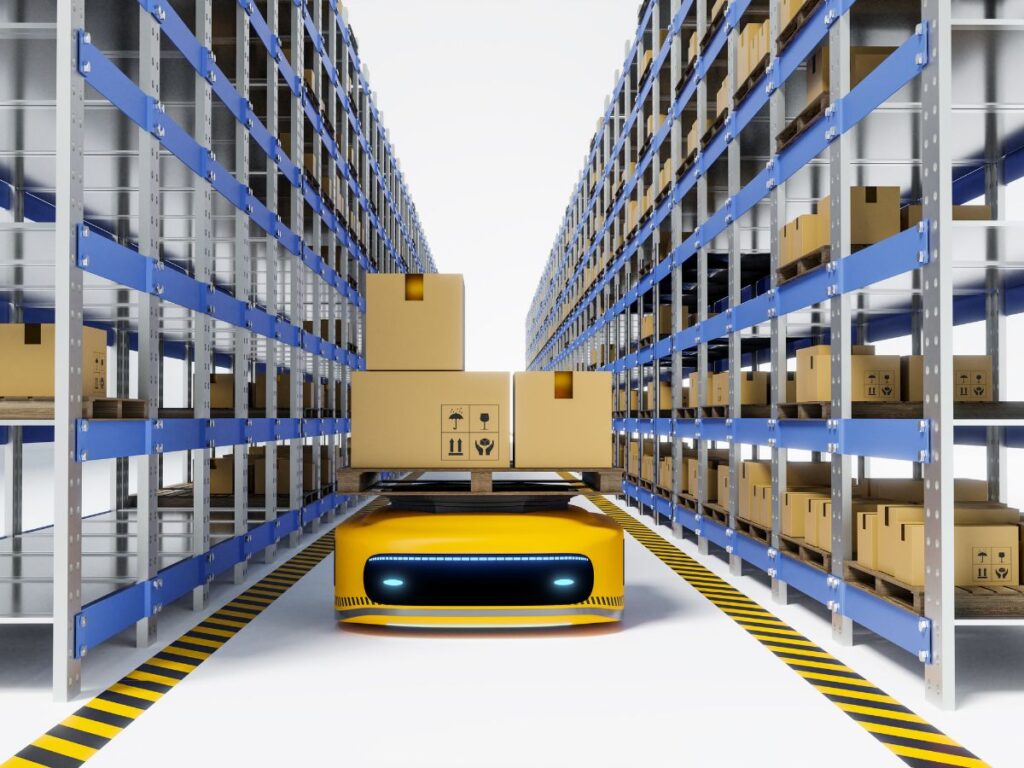
01 Reduce Manual Handling Workload
Reduce repetitive transport tasks so operators can focus on management, confirmation, and exception handling.
02 Improve Material Flow Efficiency
Automatically dispatch transport tasks based on production, warehouse, and dispatching requirements to reduce waiting and transfer time.
Safety and Real-time Visibility
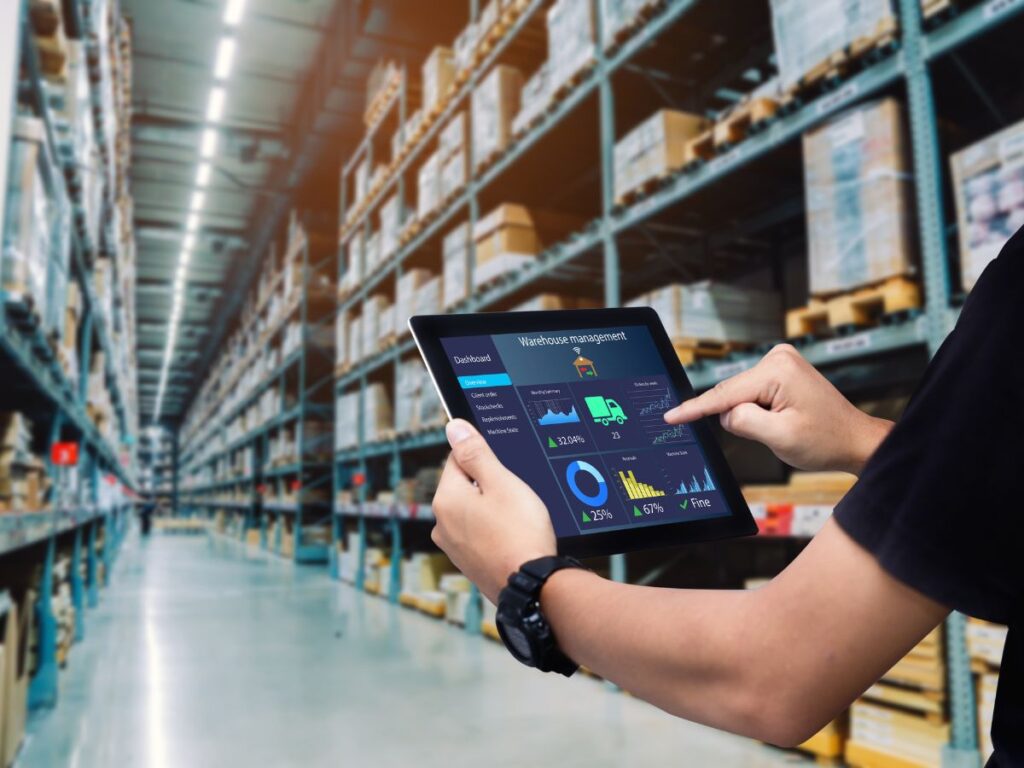
By integrating AGVs/AMRs with MES, WMS, and related systems, transport task status, vehicle location, and execution results can be written back in real time, helping managers monitor material flow progress and exceptions.
03 Strengthen On-site Safety Management
Reduce the risk of mixed traffic between people, forklifts, and materials, and establish more stable in-factory transport routes.
04 Improve Transport Process Visibility
Record task status, vehicle location, and transport results in real time, helping managers track material flow progress and abnormal events.
CUSTOMER STORY
Vactronics Technologies Inc. Customer Interview Highlights
Vactronics integrated EXC-MES with AGV operations to connect production tasks, material transport, and on-site status feedback into a unified workflow.
Mandarin Customer Interview Video
This Mandarin customer interview introduces the project background, shop-floor application, and operational results of the EXC-MES and AGV integration project.
Read the full interview to learn how Vactronics connected production tasks, AGV operations, and on-site status feedback in practice.
Ready to Integrate AGV/AMR into Your Production Flow?
NTT DATA helps manufacturers assess material handling processes, system integration requirements, and equipment connection conditions to plan practical AGV/AMR implementation approaches.