


With the evolution of large language models (LLMs), artificial intelligence has moved beyond the stage of “only being able to talk” and entered a new era of actionability.
In the context of digital transformation in manufacturing, traditional rule-based systems are gradually struggling to cope with fragmented orders and increasingly dynamic supply chain environments.
The emergence of AI Agents is not merely a technological upgrade, but a shift in manufacturing thinking, from passive tools that execute instructions to “digital employees” capable of decision-making.
1. In-depth Analysis: The Core Architecture of AI Agents and Their Manufacturing Impact
Unlike traditional robotic process automation (RPA) or isolated AI models, AI Agents are closed-loop systems powered by LLMs. Their ability to handle complex manufacturing environments comes from four key pillars:
Planning
When facing high-level and ambiguous instructions such as “optimize yield this quarter,”
Agents can leverage Chain of Thought (CoT) to break them down into sub-tasks such as checking equipment parameters, analyzing material batches, and reviewing workforce scheduling.
Memory
- Short-term memory: captures contextual information of current work orders
- Long-term memory: stores historical knowledge such as equipment failure patterns, SOP manuals, and expert know-how accumulated over years
This enables true knowledge continuity.
Tool Use / Function Calling
This serves as the “hands and feet” of the Agent. It can automatically call APIs to interact with systems such as:
- ERP (Enterprise Resource Planning)
- MES (Manufacturing Execution System)
- PLM (Product Lifecycle Management)
- PLC (shop-floor control systems)
to retrieve real-time data and execute commands.
Reflexion
After execution, the Agent evaluates whether the outcome meets the objective. If a scheduling decision leads to excessive cost, it will self-correct and recompute until a better solution is found.
2. Three Transformation Scenarios in Manufacturing: From Single Machines to the Entire Factory
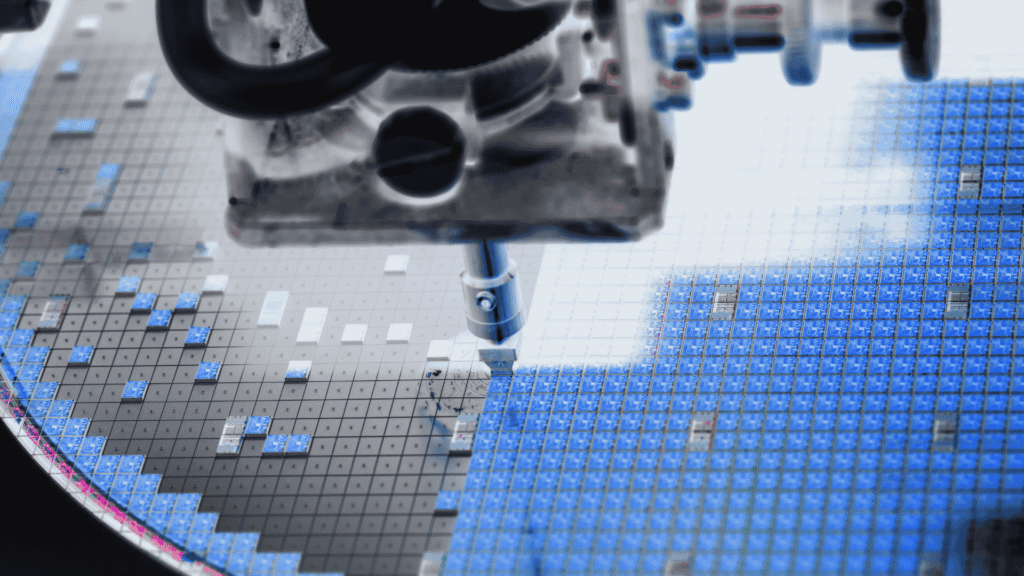
1. Smart Production Planning and Dynamic Rescheduling
In industries such as semiconductors or precision manufacturing, urgent order insertion often disrupts production plans. Traditionally, planners may spend hours adjusting schedules manually. An AI Agent acting as a virtual production manager can complete the following within seconds:
- Cross-line coordination: checking machine availability and material readiness
- Risk evaluation: estimating the impact on delivery schedules
- Decision recommendation:
“Assign the urgent order to Line C with 3% overtime cost, ensuring 95% on-time delivery.”
2. From Predictive to Prescriptive Maintenance
Traditional predictive maintenance only provides alerts (e.g., abnormal spindle vibration). With AI Agents, this evolves into prescriptive maintenance.
When anomalies occur, the Agent can:
- Review maintenance manuals
- Check spare parts inventory
- Automatically schedule maintenance
- Attempt remote adjustments before technicians arrive
3. Natural Language Gateway for Cross-Department Data
Manufacturing environments often suffer from data silos. With RAG (Retrieval-Augmented Generation), AI Agents become the information hub. Instead of waiting for reports, managers can simply ask: “Why did yield in Plant 3 drop by 2% compared to last year?” The Agent will retrieve data across systems and generate a causal analysis report.
3. Implementation Path: Challenges and Strategies
Despite its potential, deploying AI Agents presents key challenges:
- Data accuracy (Factuality): decisions based on incorrect MES data can be critical
- Latency: cloud-based inference may not meet real-time requirements → rise of Edge AI Agents
- Security and governance: requires strict identity control and audit mechanisms
4. Conclusion: The Final Step Toward the “Lighthouse Factory”
The emergence of AI Agents marks the transition from automation to autonomy in smart manufacturing. It is not only about improving efficiency, but addressing a fundamental question: how to maintain stable output in a highly dynamic environment. For manufacturers, AI Agents provide a new leverage point. Now is the critical moment to move from “having data” → “being able to act on data.”
Future factories will be intelligent organisms where AI Agents and human engineers collaborate seamlessly.