


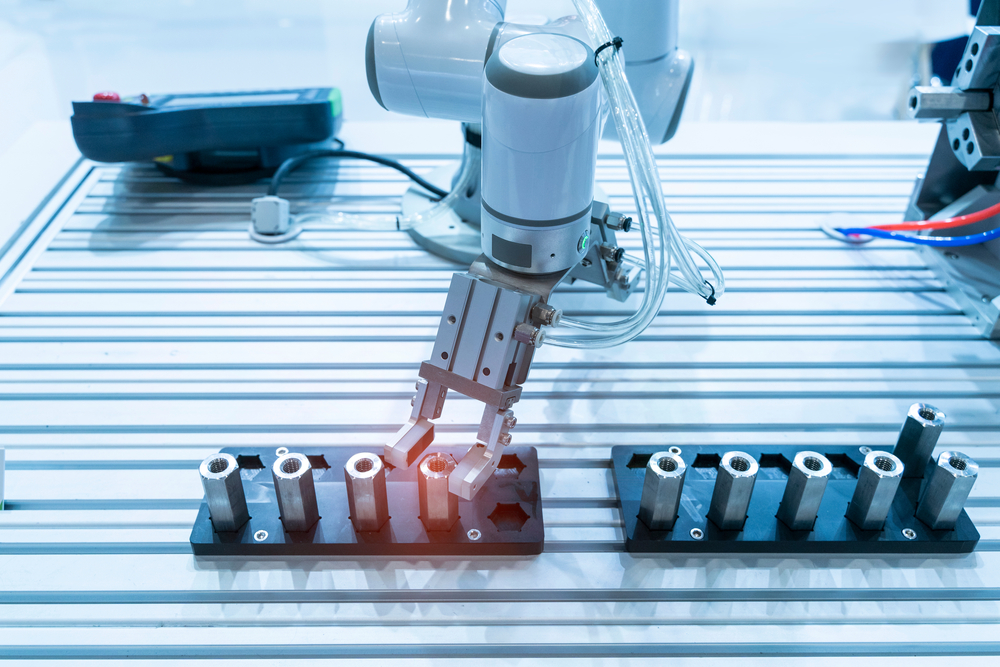
IIoT Equipment Connectivity
and Automation Solutions
Connect equipment, PLCs and sensors with MES, WMS and data platforms for real-time monitoring, alerts, recipe and parameter tracking, and production traceability.
Common Equipment Connectivity Challenges on the Shop Floor
Many factories operate equipment from different vendors and generations, each using different data formats and communication protocols. When equipment data is still recorded manually or managed in separate systems, production status is difficult to track in real time, often resulting in delayed issue resolution and fragmented process records.

Manual Data Entry Errors
Equipment status, production quantities and process parameters are recorded manually, consuming operator time and increasing the risk of missing or incorrect data.

Delayed Alarm Notifications
When equipment downtime, alarms or parameter deviations occur, relevant personnel may not be notified promptly, delaying troubleshooting and production recovery.

Limited Recipe Traceability
Production recipes and machining programs are stored separately across different machines, making it difficult to trace changes and the actual values used in production.

Limited Equipment Visibility
Without real-time equipment utilization and operating data, it is difficult to accurately plan production schedules, inspection activities and preventive maintenance.
Integration Architecture
Data Integration from Equipment to Upper-Level Systems
IIoT / EAP connects equipment, PLCs and sensors from different vendors to collect, transform and standardize equipment data. Equipment status, process parameters and production data can then be provided to upper-level systems such as MES, WMS and data platforms. When integrated with MES or WMS, EAP can also receive system instructions to support recipe and parameter downloads and equipment control.
Upper-Level Systems
Integrates equipment data with different upper-level applications to support production execution, warehouse logistics, equipment monitoring, quality traceability and data analytics.

EXC-MES
Production orders, process execution, quality management and product traceability
EXC-WMS
Warehouse operations, material delivery, inventory and material handling workflows

Data Platform
Equipment data aggregation to support analytics, dashboards and AI applications
Equipment-to-System Data
Equipment status, process parameters, operating data and alarm events

System-to-Equipment Commands
Production instructions, recipe or parameter settings, and control commands
IIoT / EAP Equipment Integration Layer
Connects equipment, collects and standardizes data, and supports filtering, recipe and parameter handling, equipment-side control and command delivery.
Equipment Connectivity
Connects equipment through multiple communication interfaces.
Data Acquisition & Transformation
Collects equipment data in real time and converts it into standardized formats.
Equipment-Side Process Control
Executes equipment-side control flows based on system instructions and equipment status.
Data Filtering
Filters data based on defined rules and excludes invalid or unnecessary data from transmission.
Recipe & Parameter Handling
Downloads recipes or parameters, or records the actual values used by equipment.
Equipment Command Delivery
Sends start and stop commands, parameter settings and remote operation instructions.
Equipment and Data Sources
Connects equipment, PLCs, sensors and existing data sources to collect status, alarms, production quantities and process parameters.
Standalone Equipment

In-Line Production Lines

PLCs

Sensors

Inspection Equipment

Databases / Files
Integration Capabilities
Flexible Connectivity for Diverse Equipment Requirements
Equipment from different vendors, models and generations may support different communication protocols and interfaces. Based on on-site equipment conditions and data requirements, the appropriate connectivity or data exchange method can be selected to integrate equipment status, process parameters and production information.
SECS/GEM
Semiconductor Equipment Communication
Exchanges equipment status, alarms, events and process parameters, enabling bidirectional communication between host systems and equipment.
OPC UA
Standardized Industrial Equipment Connectivity
Integrates equipment and control systems from different vendors through standardized interfaces, improving data exchange and future scalability.
PLC
Controller Signal and Data Acquisition
Collects equipment signals, operating status and production data from existing production lines and automation equipment.
API
System and Platform Integration
Exchanges data with equipment platforms, upper-level systems and third-party applications to connect production and management processes.
Database
Existing Database Integration
Reads from and writes to existing databases based on defined data structures and access permissions, integrating equipment, production and management information.
File / CSV
File-Based Data Exchange
Imports and exports files based on schedules or predefined conditions, supporting batch transfers and non-real-time integration scenarios.
Core Applications
Six Applications Enabled by Equipment Connectivity
Once equipment connectivity is in place and integrated with higher-level systems as needed, equipment status, process parameters and production data can support real-time monitoring, exception handling, recipe management, equipment maintenance and quality traceability.
 Real-Time Equipment Monitoring
Monitor equipment running, idle, stopped, fault and connection status in real time, with access to equipment status and operating history.
 Alarm and Exception Notifications
Collect equipment alarms and exception data, and notify relevant personnel based on predefined settings to accelerate issue resolution and production recovery.
 Recipe and Parameter Handling
Download recipes or parameters when required, or record the actual values used for traceability.
 Process Data and Quality Traceability
Link equipment parameters with products, production lots and inspection results to support process analysis, quality monitoring and issue traceability.
 Preventive Maintenance Planning
Use equipment operating, inspection and alarm data to plan maintenance and reduce the impact of unexpected failures on production schedules.
 Tooling and Fixture Management
Record the equipment, products and usage history associated with molds and fixtures to track their condition and determine appropriate maintenance timing.
Implementation Benefits
From Manual Records to Real-Time Equipment Data Management
With IIoT and EAP in place, equipment data can be automatically collected and centrally managed, reducing manual work and information gaps while improving issue response, process traceability and equipment maintenance efficiency.
Before Implementation
After Implementation

Equipment Data Management
Manual Recording Prone to Errors
Equipment status, production quantities and process parameters rely on manual recording, which is time-consuming and increases the risk of missing or incorrect data.

Automated Equipment Data Collection
Equipment status, production quantities and process data are automatically collected and sent to a centralized system, reducing manual work and improving data accuracy.


Exception Handling
Delayed Equipment Issue Detection
When equipment downtime, alarms or parameter deviations occur, relevant personnel may not receive the information promptly, delaying issue resolution.

Real-Time Alarm Notifications
Equipment issues are reported immediately and relevant personnel are notified, accelerating issue confirmation, resolution and production recovery.


Recipes and Parameters
Recipe and Parameter Usage Is Difficult to Trace
Recipes and equipment parameters are stored across different machines, making changes and the values actually used difficult to verify.

Digital Recipe and Parameter Records
Automatically records the recipes and parameters actually used by equipment. When integrated with MES, EAP can also download recipes based on production instructions.


Maintenance Planning
Difficulty Planning Production and Maintenance
Without real-time equipment operating and alarm data, production scheduling and preventive maintenance are difficult to plan accurately.

Improved Equipment Management and Maintenance Efficiency
Real-time equipment operating data supports better production and maintenance planning while reducing the impact of unexpected failures.
Implementation Process
A Four-Stage Process from Equipment Assessment to Go-Live
Based on on-site equipment conditions and implementation requirements, communication planning, data integration and testing are completed in stages to reduce connectivity risks, ensure stable data transmission and support future expansion.
01
Equipment Assessment
Confirm Equipment Conditions and Project Scope
Review equipment brands, models, communication interfaces and data requirements, and confirm existing systems and the on-site network environment.
02
Communication and Data Point Planning
Define How Data Will Be Collected
Select suitable communication methods and define data points for equipment status, alarms, events and process parameters.
03
Connectivity Setup and Validation
Establish Connections and Verify Data Accuracy
Complete equipment connectivity, data mapping and system integration, then verify data completeness, accuracy and connection stability.
04
Go-Live Monitoring and Optimization
Expand Applications Based on Production Needs
Monitor data transmission after go-live and expand data points, alarm rules and automation applications based on operational needs.
Related Resources
Equipment Connectivity for Data Applications and Preventive Maintenance
Explore related articles and webinar content to learn how equipment connectivity supports factory data applications, equipment visibility and preventive maintenance.
 Related Article
From Equipment Connectivity to an AIoT-Enabled Smart Factory
Learn how equipment connectivity, data storage, real-time production dashboards, data analytics and AIoT help manufacturers turn equipment data into a foundation for intelligent production management.


 Webinar Recording (Chinese)
Preventive Equipment Maintenance: Webinar Highlights
Learn how equipment status, maintenance cycles and service records can be integrated to establish a preventive maintenance process and reduce the risk of unexpected equipment downtime.
FAQ
Frequently Asked Questions About IIoT Equipment Connectivity and EAP
From equipment connectivity and data transmission to system integration, the following questions are commonly considered when evaluating an IIoT and EAP implementation.
Can existing or legacy equipment be connected?
Yes. We first assess whether the equipment provides interfaces such as PLC connections, serial ports, Ethernet, database access or file exports, and then select an appropriate data acquisition method. If no usable interface is available, additional options such as gateways, sensors or equipment retrofits can be evaluated.
Can equipment from different vendors using different communication protocols be integrated?
Yes. Depending on the interfaces supported by each machine, integration can be achieved through SECS/GEM, OPC UA, PLCs, APIs, databases or File/CSV exchange. The actual integration scope must be confirmed based on equipment specifications, communication documentation and the level of data access available.
Can EAP both collect equipment data and write parameters back to equipment?
Yes. In addition to collecting equipment status and process data, EAP can record the recipes and parameters actually used by equipment. Depending on equipment capabilities, access permissions and the integration design, it can also support recipe downloads, parameter write-back and specific equipment commands. Equipment control functions should include appropriate operational safeguards, access control, testing and validation.
Can equipment data be transmitted in real time?
Yes. Depending on the communication protocol, equipment capabilities and application requirements, data can be collected through real-time event reporting or scheduled polling. The implementation should also define reconnection, data recovery and exception notification mechanisms to maintain data completeness and connection stability.
Can the solution integrate with EXC-MES, EXC-WMS or other existing systems?
Yes. Equipment data can be provided to EXC-MES, EXC-WMS, equipment management platforms or other upper-level systems through APIs, databases or file exchange. The integration architecture and scope are planned according to each system’s responsibilities and the required data flows.
Do all machines need to be connected at the same time?
No. We recommend starting with a representative pilot production line to validate equipment communication, data completeness and accuracy, system integration and actual operating workflows. The implementation can then be expanded gradually to other production lines and sites, reducing initial deployment risks.
Connect Equipment Data with Production Management
From equipment interface assessment and communication planning to integration with MES, WMS or data platforms, we help you develop a practical equipment connectivity solution tailored to your shop-floor conditions.