


Semiconductor Smart Manufacturing
Semiconductor MES Case Studies
Explore how semiconductor manufacturers integrate equipment, production, warehousing, material transport, and AI with EAP/IIoT, Excellent MES (EXC-MES), Excellent WMS (EXC-WMS), and AGV solutions.
SUCCESS HIGHLIGHTS
Proven Results in Semiconductor Smart Manufacturing
By integrating equipment connectivity, MES, WMS, and automation, we help semiconductor manufacturers improve quality and production efficiency.
Semiconductor Materials

8%
Yield Improvement
- Data collection efficiency ↑100%
- Annual cost savings of approx. USD 340,000
Optical / Semiconductor Coating

33%
Material Handling Efficiency
- Loading/unloading labor requirements ↓83%
- Cycle time ↓10%
- Work in process (WIP) ↓23%
Reclaimed Wafer

80%
Automation Efficiency Improvement
- Yield ↑75%
- Equipment utilization ↑10%
Note: The above figures represent selected NTT DATA semiconductor implementations. Actual results may vary by operational environment and requirements.
CORE CAPABILITIES
Core Integration Capabilities for Semiconductor Smart Manufacturing
Connect equipment data, production traceability, warehousing, and automated material transport to create an integrated semiconductor manufacturing environment.

EAP/IIoT Equipment Connectivity
Automatically collect equipment events, alarms, and process parameters to establish a unified source of equipment data.

WIP & Production Traceability
Track Lot, Wafer, and Carrier data to support split, merge, and rework operations.

Quality Management & SPC
Integrate measurement and inspection data, trigger real-time alerts, and connect nonconformance handling workflows.

Equipment & Alarm Management
Manage equipment maintenance, downtime, and operating status, with support for Port- and Chamber-level management.

Warehouse & ERP Integration
Connect inbound/outbound operations, material issue and return, and automatic backflushing, with real-time updates to ERP for better inventory record accuracy.

AGV Automated Transport Integration
Connect MES dispatching with process-to-process transport to automate material movement across manufacturing operations.
SUCCESS CASES
Semiconductor Case Studies
Explore how equipment connectivity, MES, WMS, AGV, and AI are applied across semiconductor materials, optical and semiconductor coating, reclaimed wafers, and wafer foundry operations—and the results they deliver.
CASE 01
Semiconductor Materials | Injection Molding Equipment Connectivity & Process Optimization
Customer Background
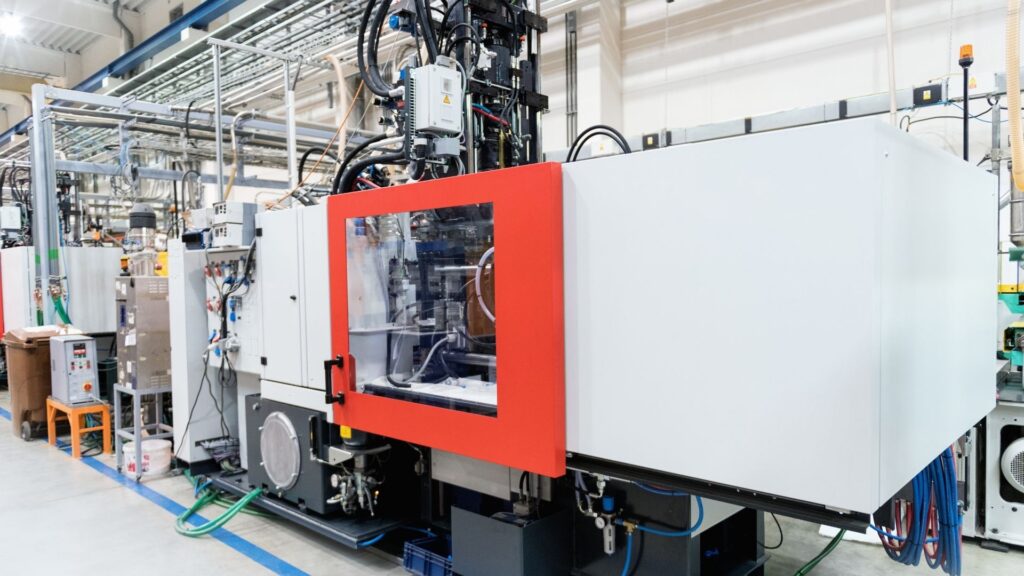
A global supplier of materials for the semiconductor and high-tech industries needed real-time visibility into critical process parameters from injection molding equipment to improve process stability and product quality.
Implementation Focus
- Connected temperature and pressure sensors to automatically capture molding-cycle and second-by-second process data.
- Integrated existing analytics for process parameter analysis and machine parameter optimization.
 Solution Flow

01
Equipment Data Integration


02
Sensor & Machine Data Integration

03
Real-Time Transfer

04
Trend Analysis & Anomaly Alerts
 Benefits

↑8%
Yield Improvement

↑100%
Data Collection Efficiency

Approx.
USD 340,000
Annual Cost Savings
CASE 02
Optical / Semiconductor Coating | Equipment Connectivity, EXC-MES & AGV Integration

Customer Background
An optical and semiconductor coating manufacturer needed to improve equipment utilization, production efficiency, and on-time delivery performance through integrated production management and automated material transport.
Implementation Goals
- Improve equipment utilization and production visibility
- Establish production traceability and KPI management
- Enable automated process-to-process transport
 Implementation Journey

Phase 1
Equipment Connectivity & Utilization Visibility
Phase 2
EXC-MES for Traceability & KPI Management

Phase 3
EXC-MES RTD Module & AGV Integration for Automated Transport
Benefits
↑33%
Material Handling Efficiency

↓83%
Loading/Unloading Labor Requirements

↓10%
Cycle Time

↓23%
Work in Process (WIP)
CASE 03
Reclaimed Wafer | EXC-MES & EXC-WMS Production and Warehouse Integration

Customer Background
A 12-inch reclaimed wafer manufacturer initially implemented MES at its new facility for production management, incoming material management, and EDI reporting, then expanded to quality and warehouse management.
Implementation Goals
- Establish Wafer, Lot, and Carrier traceability
- Enhance equipment-level management and visibility
- Integrate warehouse operations with ERP to improve inventory record accuracy
Implementation Journey
Phase 1
EXC-MES Production & Equipment Management
Track Wafer, Lot, and Carrier IDs, with equipment management extended to Port and Chamber levels.

Phase 2
EXC-WMS Warehouse & ERP Integration
Integrate warehouse operations and ERP updates to improve inventory accuracy and reduce accounting errors.
Benefits
↑75%
Yield Improvement

↑10%
Equipment Utilization

↑ 80%
Automation Efficiency
CASE 04
Wafer Foundry | AI-Powered Defect Classification
Customer Background
Wafer defects span multiple categories, making manual classification time-consuming. The manufacturer needed faster and more accurate defect identification to reduce scrap losses and improve production efficiency.
Implementation Goals
- Improve wafer defect classification efficiency
- Increase defect classification accuracy
- Expand identifiable defect categories while reducing manual classification workload
 Implementation Focus
01
Automated Wafer Defect Classification
Automatically classify wafer defects to support faster root-cause identification and corrective actions.
02
AI Model & Automated Classification
Apply AI models to automate defect classification, reducing manual effort while improving efficiency and accuracy.
Benefits
8 → 44 Categories
Classifiable Defect Categories
Expanded from 8 to 44 categories

80% → 85%
Classification Accuracy
Improved from 80% to 85%

↑ 10%
AI Classification Efficiency
10% improvement with AI classification
Semiconductor Industry FAQ 
Q1: How is semiconductor equipment connected?
A: EAP/IIoT connects equipment alarms, process parameters, and other data to EXC-MES or visualization dashboards for real-time equipment and process monitoring.
Q2: What production and WIP data can EXC-MES trace?
A: EXC-MES traces Lot, Wafer, and Carrier data and supports split, merge, and rework operations for complete production traceability.
Q3: How does EXC-WMS integrate with ERP?
A: EXC-WMS integrates inbound/outbound, material issue/return, and automatic backflushing with ERP to improve inventory accuracy and reduce discrepancies.
INSIGHTS
Smart Manufacturing Insights
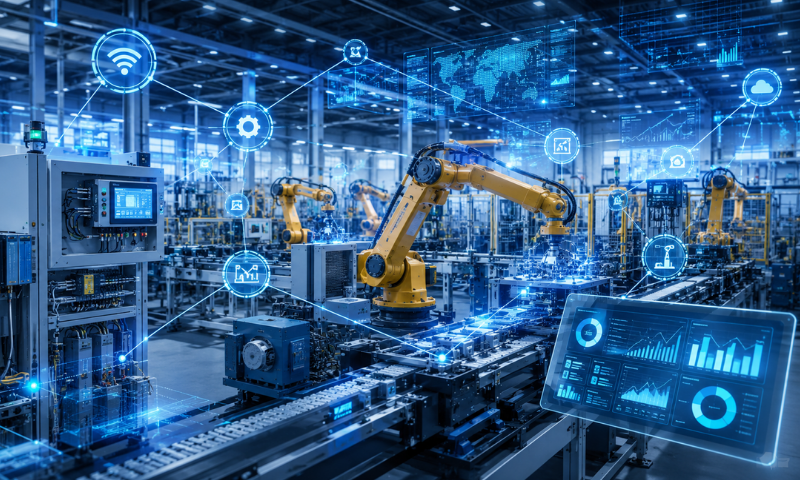
From IIoT Connectivity to the Smart Factory
Explore how manufacturers can advance step by step from equipment data and MES integration to AI applications.
5 Key Factors for Successful MES Implementation
Learn the key factors for successful MES implementation, from clear objectives and data quality to continuous improvement.

Planning Your Semiconductor Smart Manufacturing Journey?
Across equipment connectivity, production and quality management, smart warehousing, and automated material transport, we design integrated solutions around your existing systems and shop-floor requirements.