


EXC-MES × Smart Manufacturing Applications
FANUC Industrial Robots
From Production Automation to Smart Manufacturing Integration
Manufacturing Challenges
Three Challenges in Adopting Industrial Robot Automation
With labor shortages, increasing product variety, and growing demands for efficiency, more manufacturers are considering industrial robots. However, effective automation requires careful planning, from production processes and robot selection to production information management.
Heavy Reliance on Manual Operations
Repetitive tasks such as loading, unloading, material handling, and sorting often depend on manual labor. Workforce availability and inconsistent cycle times can affect production capacity and increase labor management challenges.
Diverse Production and Equipment Requirements
Different products and processes require different payloads, speeds, precision levels, and working spaces. These varying requirements make robot selection and production line automation planning more complex.
Automation and Management Gaps
Even after introducing automated equipment, manufacturers may struggle to track production progress, equipment status, and quality information if shop floor operations are not effectively connected with production management systems.
Product Series
FANUC Industrial Robots for Diverse Manufacturing Needs

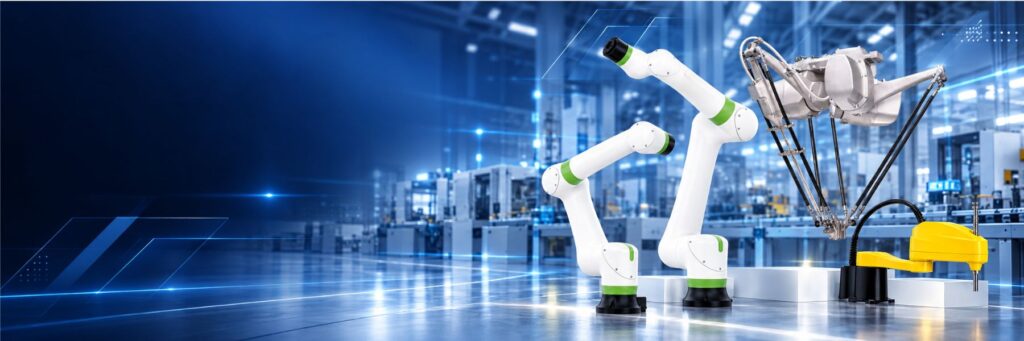
FANUC offers a wide range of industrial robots, including collaborative robots, SCARA robots, and high-speed Delta robots. These robots support applications such as machine loading and unloading, precision assembly, high-speed picking, and packaging, helping manufacturers select suitable automation equipment for their production needs.
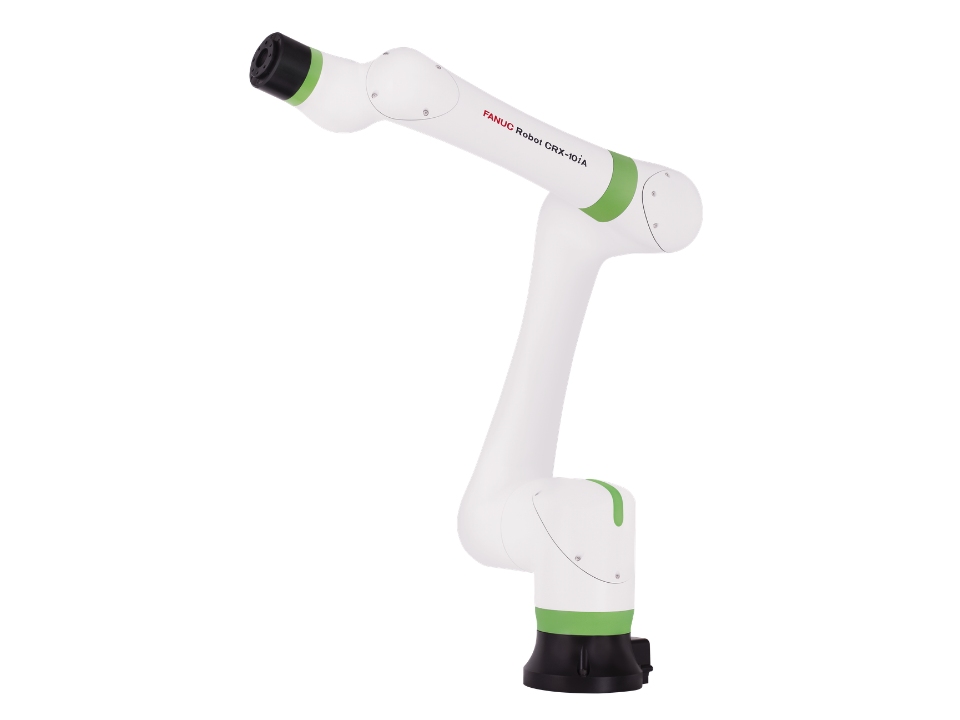
CRX-10iA|Collaborative Robot
Easy to operate and flexible to deploy, the CRX-10iA is suitable for part handling, machine loading and unloading, and repetitive material handling tasks. It helps manufacturers take the first steps toward production automation.
Payload: 10 kg | Reach: 1,249 mm
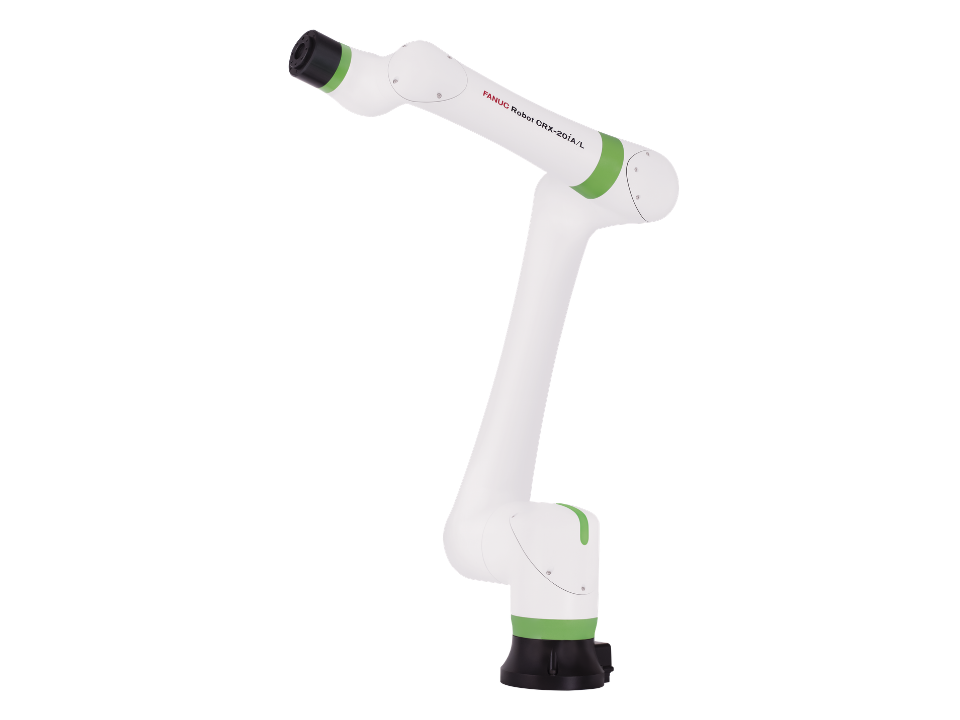
CRX-20iA/L|Collaborative Robot
With a higher payload capacity and flexible working range, the CRX-20iA/L is suitable for handling heavier workpieces, machine loading and unloading, and material handling applications.
Payload: 20 kg | Reach: 1,418 mm
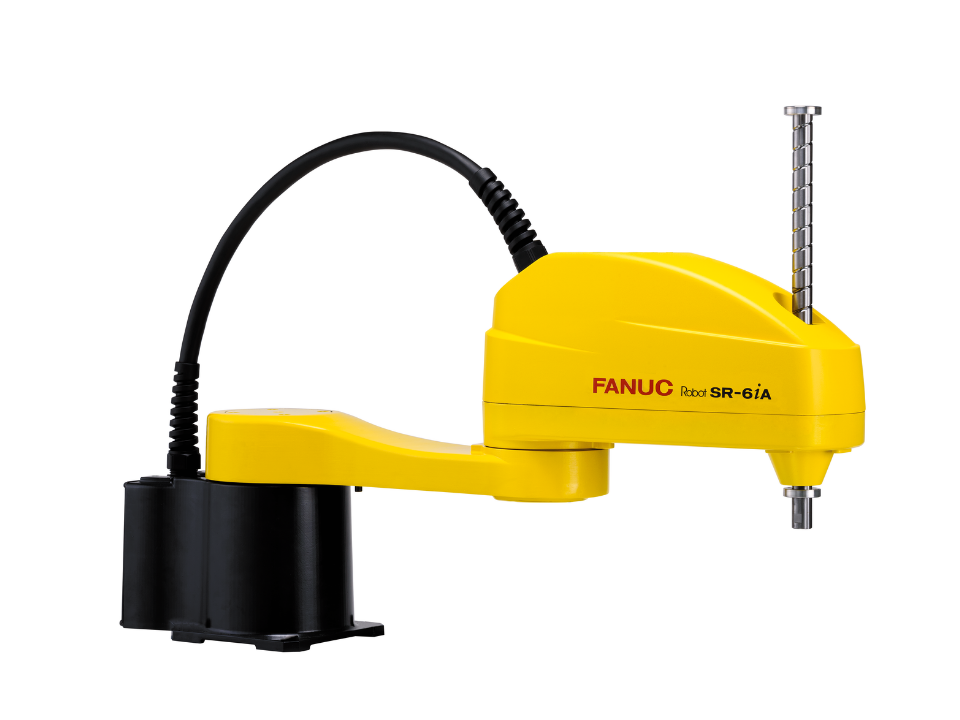
SR-6iA|SCARA Robot
Featuring a high-speed, high-precision horizontal articulated design, the SR-6iA is suitable for electronic component handling, precision assembly, and automated parts positioning.
Payload: 6 kg | Reach: 650 mm
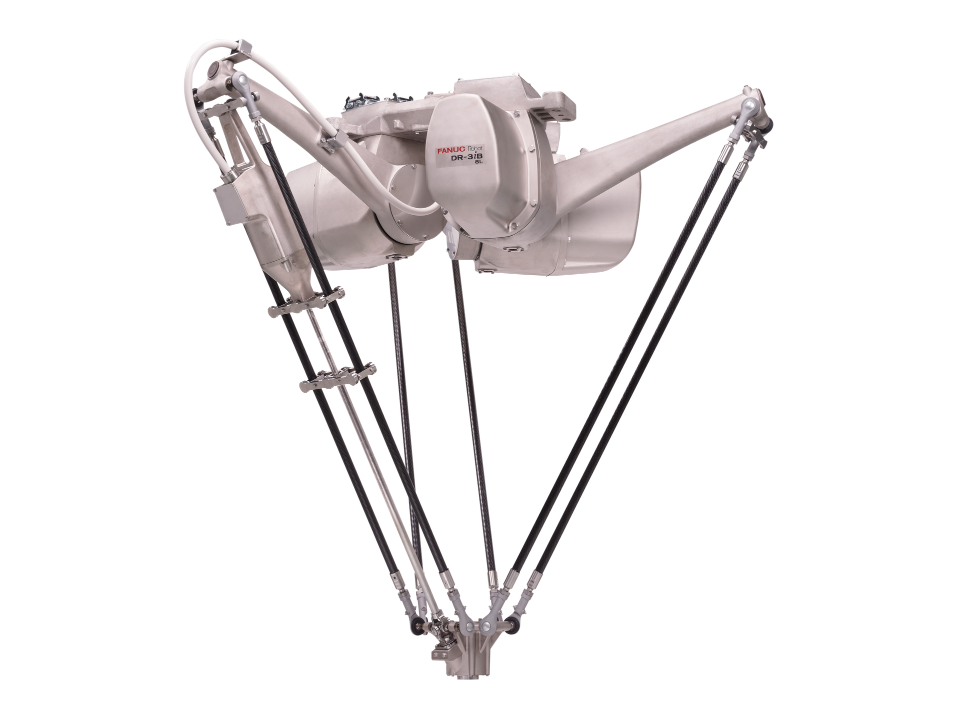
DR-3iB/8L|Delta Robot
Designed with a high-speed parallel-link structure, the DR-3iB/8L is suitable for fast picking, sorting, and arranging products in food, pharmaceutical, and packaging production lines.
Payload: 8 kg | Working Envelope (Ø): 1,600 mm
Key Advantages
Four Key Advantages of FANUC Industrial Robots
FANUC combines reliable design, precise motion control, and intelligent technologies to support a wide range of manufacturing automation needs. These capabilities help manufacturers improve operational efficiency, equipment reliability, and production flexibility.

High Reliability and Stable Operation
FANUC emphasizes the integrated design of robot mechanisms, servo control, and software technologies to deliver reliable automation equipment that supports long-term operation in manufacturing environments.

High-Speed and Precise Operations
With precise motion control and a variety of robot structures, FANUC robots support high-speed picking, precision assembly, and material handling, helping manufacturers improve production efficiency.

iRVision Intelligent Vision Technology
FANUC robots can be equipped with the iRVision system based on application requirements. It supports part positioning, vision-guided picking, and visual inspection to improve automation flexibility.

ZDT Predictive Maintenance Technology
FANUC Zero Down Time (ZDT) analyzes equipment conditions and operating data to help identify potential issues early, support maintenance planning, and reduce the risk of unexpected downtime.
Note: The availability of intelligent functions depends on the robot model, controller, and optional configurations. Actual capabilities are subject to FANUC product specifications and application assessment.
Applications
Four Key Manufacturing Applications of FANUC Industrial Robots
FANUC industrial robots are widely used in metalworking, electronics assembly, food processing, and packaging industries. With different robot structures and automation technologies, they support various manufacturing processes, helping companies reduce repetitive manual work and improve production efficiency and operational consistency.

CNC Machine Loading and Unloading
Collaborative robots can handle workpieces and perform loading and unloading tasks for CNC machines, reducing repetitive manual operations while improving machine operation continuity and production flexibility.
Applicable Series: CRX Collaborative Robots

Precision Assembly and Parts Handling
SCARA robots provide high-speed movement and precise positioning for electronic component assembly, parts handling, and component arrangement, supporting efficient automated production.
Applicable Series: SR SCARA Robots

High-Speed Picking and Sorting
Delta robots perform high-speed picking, sorting, and product arrangement on conveyor lines. They are suitable for food, pharmaceutical, and packaging applications that require fast product handling.
Applicable Series: DR Delta Robots

Packaging and Material Handling
Depending on product weight, operating speed, and production line layout, industrial robots can perform product handling, packaging pick-and-place, and material transfer tasks, improving operational consistency and reducing manual workload.
Applicable Series: CRX / DR
Smart Manufacturing Integration
From Robot Automation to Production Management
Industrial robots can improve automation on the shop floor. However, integrating production information requires careful consideration of equipment interfaces, available data, and management needs. With its EXC-MES expertise, NTT DATA Taiwan helps manufacturers assess opportunities to integrate automated equipment with smart manufacturing systems.
FANUC Robot Automation
FANUC industrial robots support loading and unloading, precision assembly, high-speed picking, and material handling, helping manufacturers increase automation across production lines.
Equipment Data Integration Assessment
Based on the robot model, controller, and communication interfaces, available equipment data can be reviewed to assess the technical feasibility of data collection and system integration.

EXC-MES Production Management
EXC-MES provides work order, process, quality, and equipment management functions. Depending on data availability, manufacturers can further evaluate opportunities to integrate equipment information with production management processes.
Note: The integration approach shown is conceptual and does not represent an existing FANUC–EXC-MES interface. Actual feasibility depends on equipment models, communication interfaces, and technical requirements.
Learn More About Equipment Data Integration
The EXC-MES website also introduces the Excellent MES × FIELD system Basic Package solution, which explains how manufacturing equipment data can be collected and integrated with production management systems.
This solution provides additional reference for equipment data integration. However, it does not mean that the FANUC robots introduced on this page have already been connected through the same interface.
Plan the Right Robot Automation Solution for Your Factory
Contact NTT DATA Taiwan to discuss FANUC industrial robot selection, automation applications, and smart manufacturing integration requirements.