


Smart Warehouse Trends
From Manual Warehouse Operations to Integrated Automation
As manufacturing and logistics requirements continue to evolve, warehouses are no longer simply spaces for storing materials and finished goods. They have become a critical part of production efficiency, delivery reliability and operating costs.
Traditional warehouse operations rely heavily on manual handling, material searching and data verification. As order volumes, item varieties and inbound or outbound activities increase, businesses may face lower handling efficiency, inaccurate inventory data and operational errors. Integrating automated handling equipment with control systems has therefore become an important step toward smart warehouse development.
Automation Integration
From Equipment Handling to System-Directed Logistics
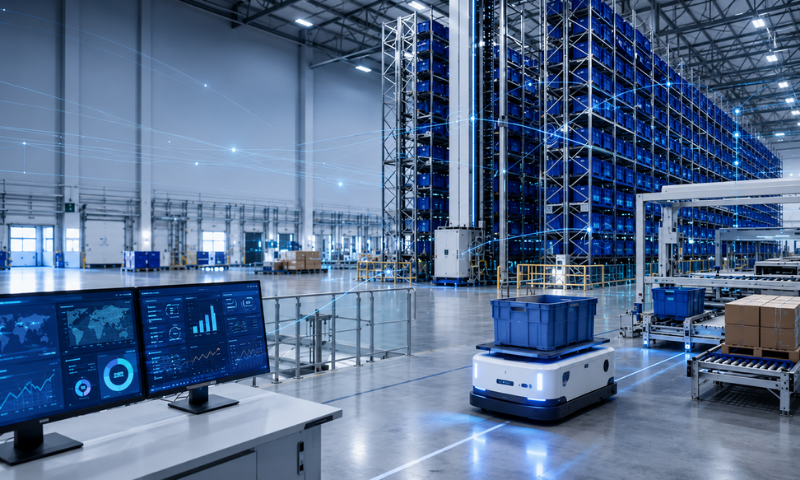
Smart warehouse automation is not simply about replacing manual handling with equipment. It enables handling, storage, picking and outbound operations to be coordinated through connected systems. By using AGVs, AMRs, automated storage systems and conveyors, businesses can gradually automate repetitive and long-distance material movements.
When automated handling equipment is integrated with WMS, WCS and PLC systems, logistics tasks can be assigned to suitable equipment for execution. Task status, storage locations and inventory information can then be updated in real time, creating a complete cycle of system assignment, equipment execution and data feedback.
Key Benefits
Operational Value of Smart Warehouse Automation
By integrating automated handling equipment with warehouse management and control systems, businesses can improve logistics efficiency, inventory management, operational safety and real-time visibility.
5
Operational Benefits

Improve Operational Efficiency
Reduce manual handling, material searching and long-distance travel to accelerate logistics operations.

Improve Inventory Accuracy
Update material, storage location and inventory data in real time to reduce manual-entry and stocktaking discrepancies.

Reduce Operational Risks
Reduce interaction between personnel and handling equipment, lowering forklift and mixed-traffic risks.

Enhance Scalability
Gradually expand equipment and automation as production capacity, order volumes and item varieties change.

Improve Management Visibility
Gain real-time visibility into logistics tasks, equipment status and inventory to quickly track on-site progress.
Implementation Key Areas
Smart Warehouse Success Requires More Than Automation Equipment
The success of a smart warehouse depends on more than AGVs, AMRs, automated storage systems or conveyors. If operational goals are unclear, workflows have not been reviewed, or system data does not align with on-site management practices, automation may fail to deliver its full value.
Effective smart warehouse planning requires more than evaluating equipment and system capabilities. It also involves process alignment, system integration, and the establishment of ongoing maintenance and management mechanisms. Together, these elements help automation move beyond isolated equipment deployment and develop into a stable, sustainable smart logistics operation.
Three Key Areas for Smart Warehouse Implementation

Equipment and System Deployment
Introduce automated handling equipment, control systems and warehouse management systems based on actual operational needs to establish practical logistics workflows.
Alignment of Operational Goals and Processes
Identify logistics challenges, operational goals and working conditions before determining the appropriate automation scope and implementation sequence.

Maintenance and Management Framework
Establish operating standards, system maintenance, responsibilities and performance management mechanisms to support stable, continuous operations.
Sustainable Operations
From Isolated Automation to Sustainable Smart Logistics
The value of automated material handling and control goes beyond reducing labor requirements or shortening processing time. More importantly, it creates an integrated operating model in which equipment, logistics processes and management systems work together continuously. When logistics tasks, equipment status, storage locations and inventory information are connected in real time, managers gain clearer visibility into on-site progress and can adjust operations based on actual business needs.
By integrating equipment and systems, aligning operational processes and establishing effective maintenance and management mechanisms, smart warehouse automation can evolve from an isolated project into a scalable, manageable and continuously improving smart logistics foundation that supports future capacity growth and digital transformation.
Related Solutions
Integrated Solutions for Smart Warehouse Automation
Smart warehouse planning requires the right combination of automation equipment and management systems based on material characteristics, handling routes, storage needs and the existing system environment. Together, these solutions connect task assignment, equipment execution and inventory updates across warehouse operations.
Solution 1
AGV/AMR Automation Integration
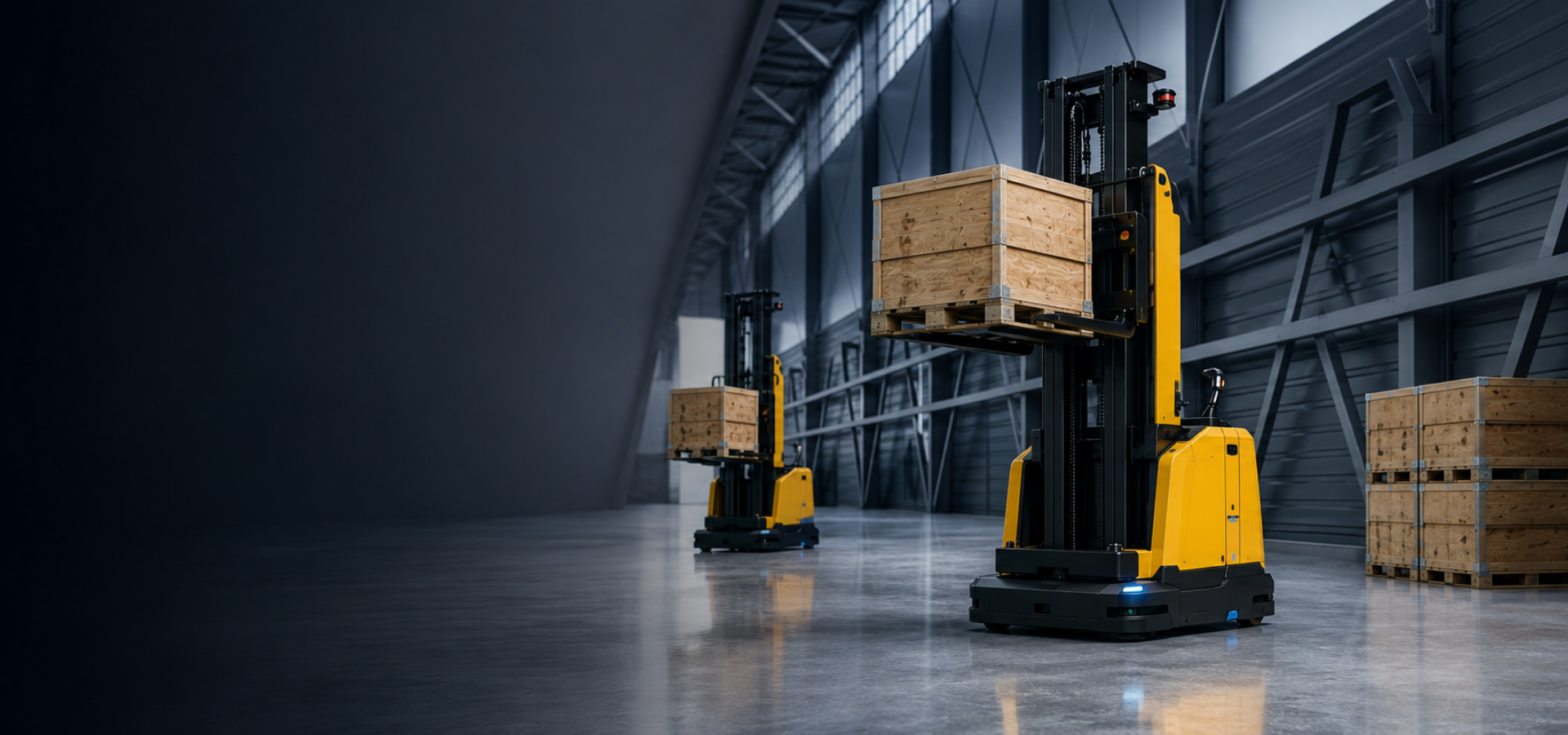
Integrate AGVs, AMRs with WMS, MES, AGV control systems and related operational systems to coordinate task assignment, equipment execution and status updates. The solution supports inbound handling, line-side replenishment, workstation transfers and finished-goods movement.
Solution 2
Automated Storage and Goods-to-Person Picking
Integrate automated storage equipment, conveyors and Goods-to-Person workflows to improve space utilization, material access and picking efficiency. It is suited to operations with diverse SKUs, frequent inventory movement or limited storage space.

Solution 3
EXC-WMS Warehouse Management
Use EXC-WMS to manage inbound, outbound, transfers, stocktaking and inventory status while connecting with ERP, MES and automated handling equipment. This keeps logistics tasks and inventory data synchronized across warehouse operations.

Contact Us
Plan a Smart Warehouse Solution That Fits Your Operations
There is no one-size-fits-all approach to smart warehouse implementation. Existing workflows, material characteristics, handling frequency, storage conditions and system integration requirements must all be evaluated before determining the appropriate equipment combination and implementation scope.
NTT DATA Taiwan can help assess warehouse and intralogistics requirements while integrating EXC-WMS, AGV/AMR solutions, automated storage equipment and related control systems. This enables the gradual development of a practical, scalable and manageable smart logistics operation.
Contact us to discuss your warehouse automation and system integration requirements.